Last updated November 23, 2026
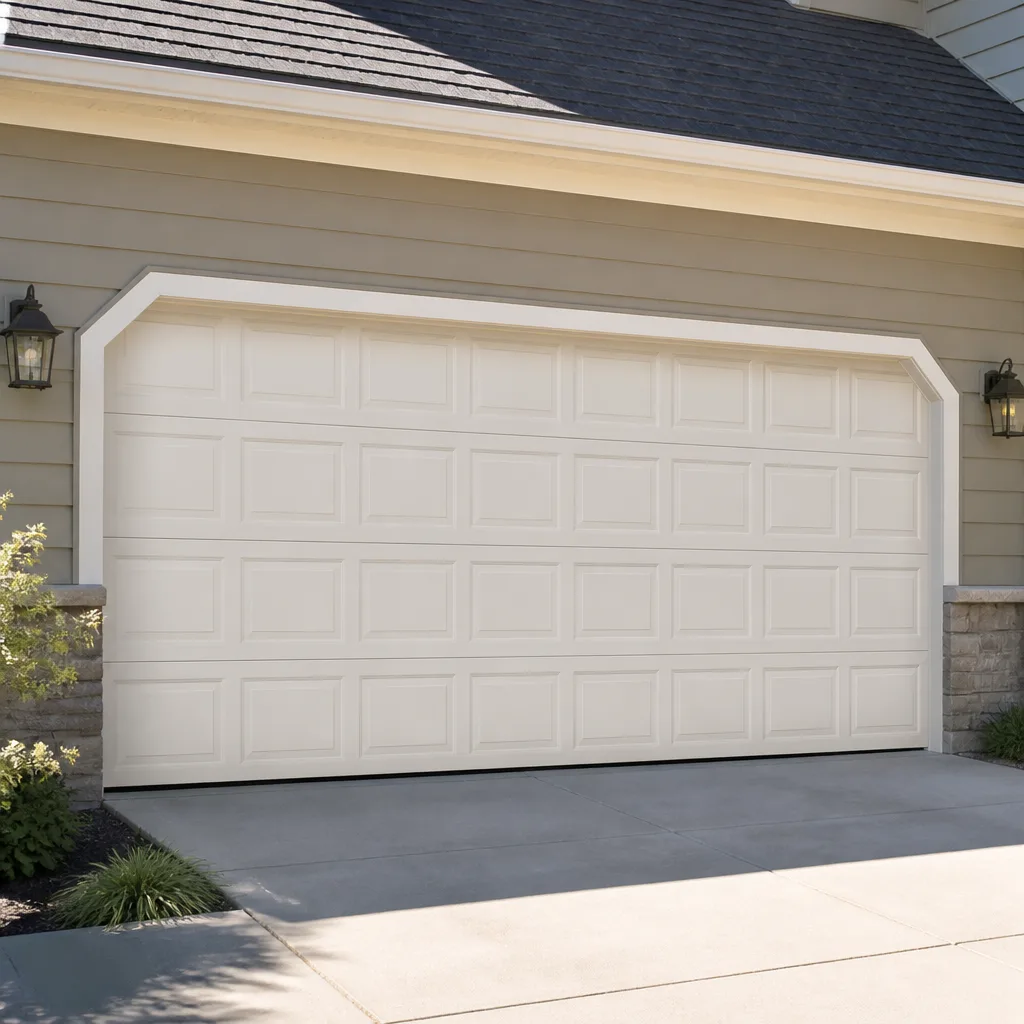 Raised-panel steel
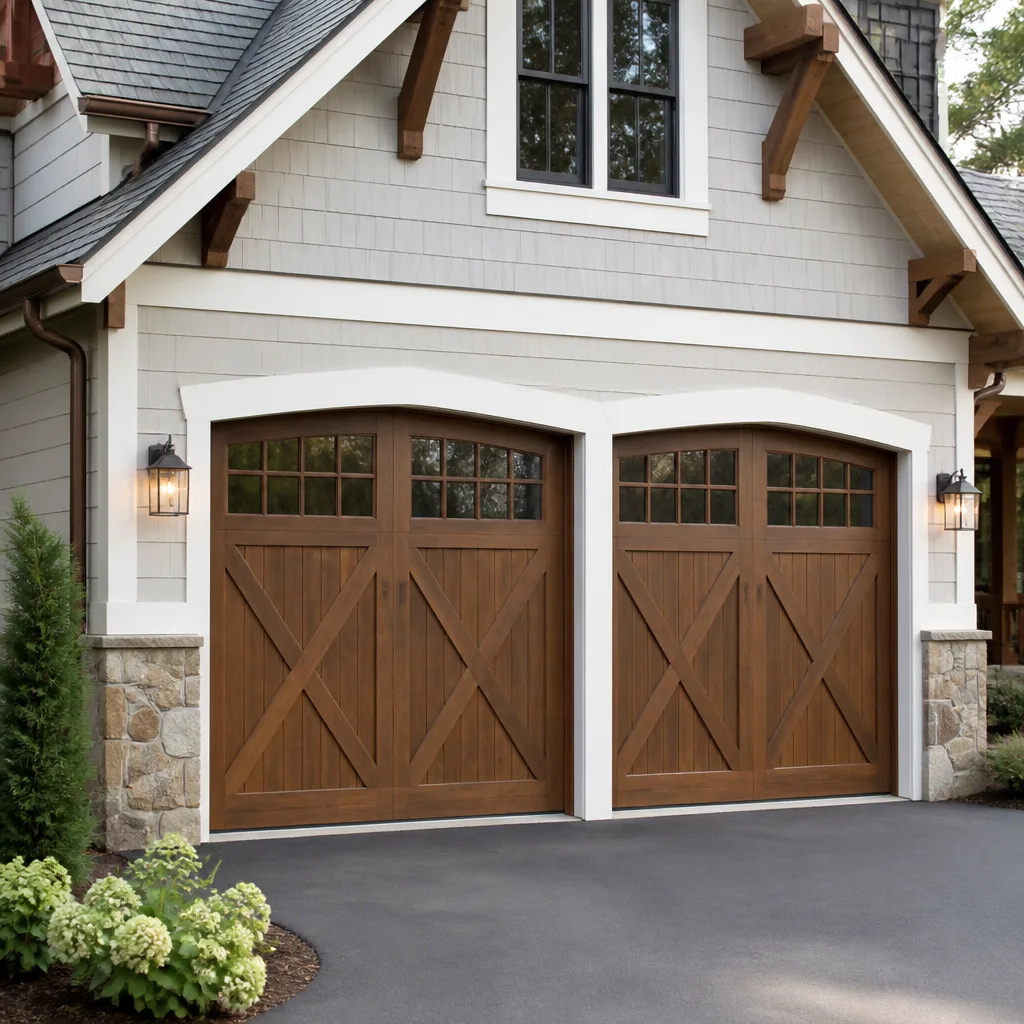 Carriage house
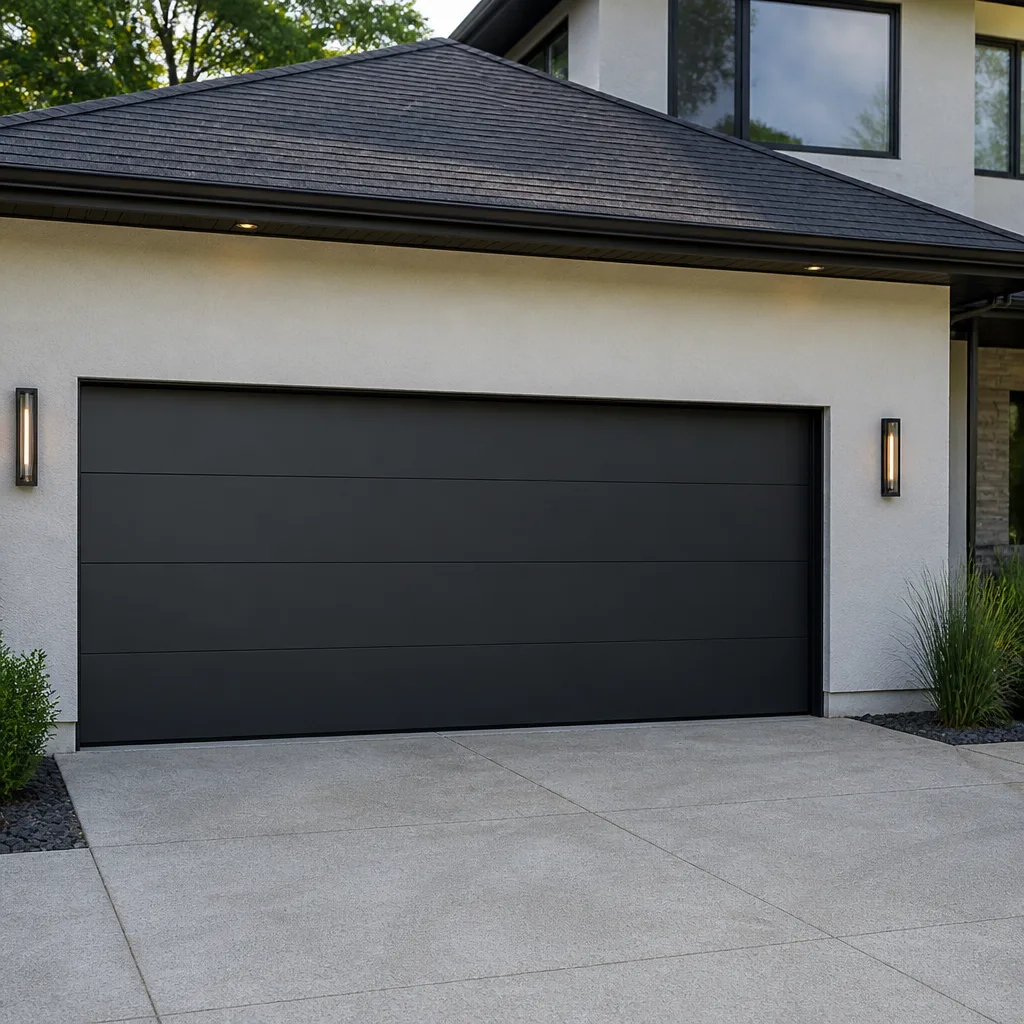 Modern flush
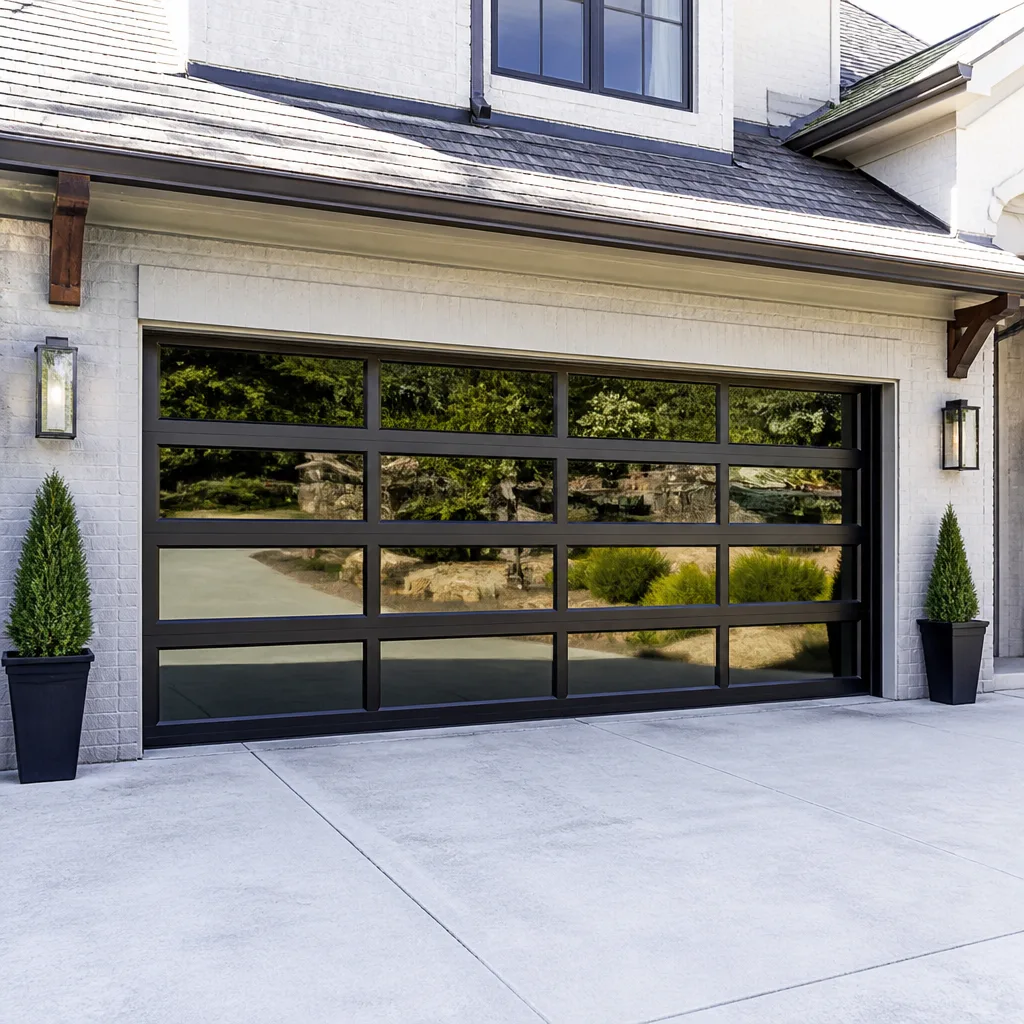 Full-view glass
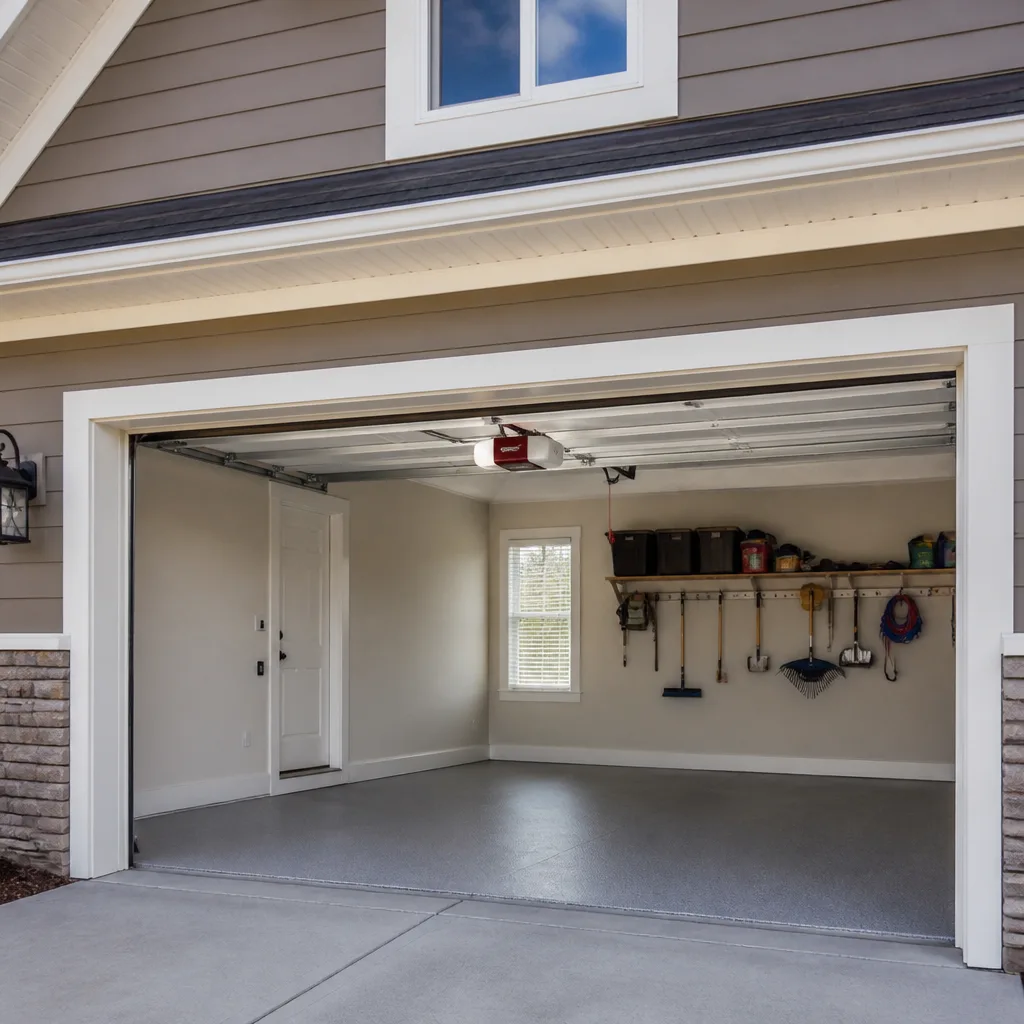 LiftMaster openers
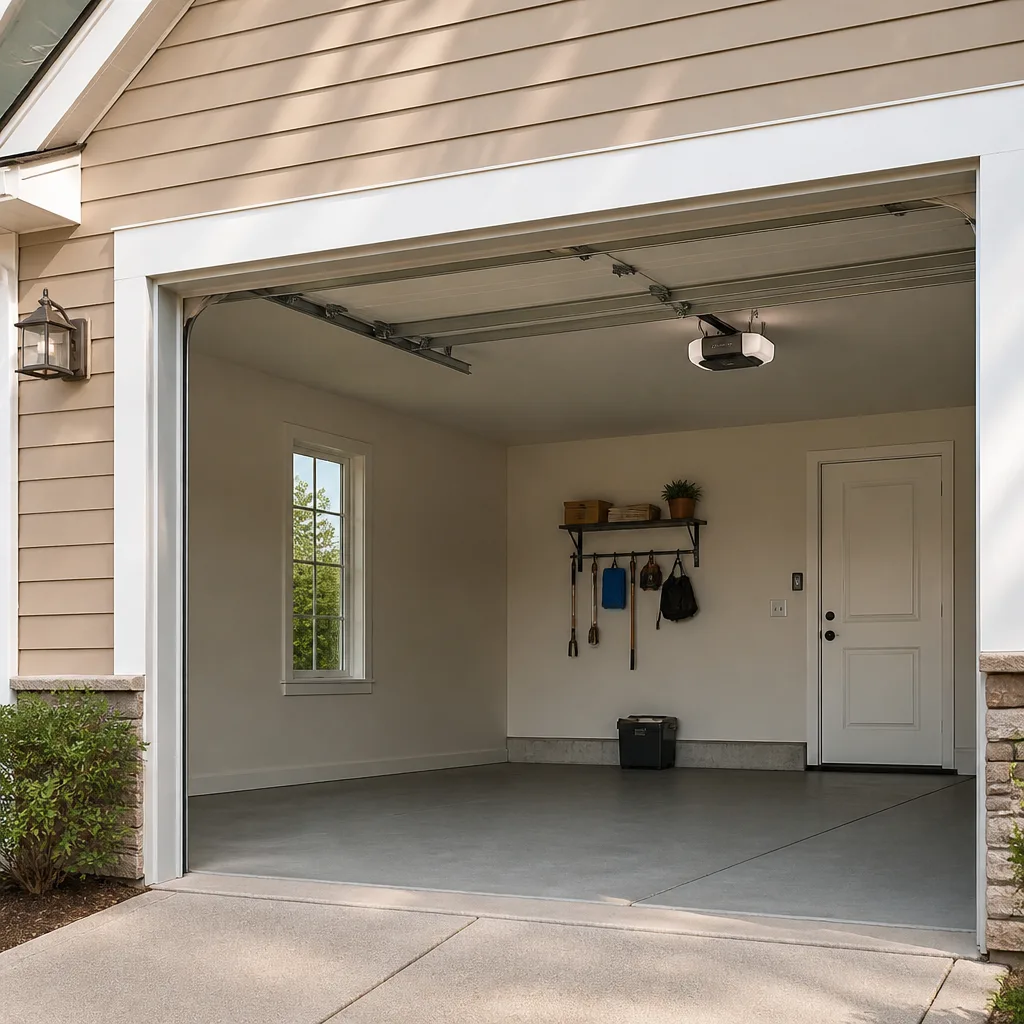 Chamberlain openers
Full 25-point door and opener safety check with every visit - springs, cables, rollers, tracks, and your LiftMaster or Chamberlain opener included
You get a price before we start. It does not change when the pro arrives.
Get your free estimateGarage Door Emergency Preparedness Guide for Trenton Homes
When a torsion spring snaps at 7 AM on a weekday, most Trenton homeowners don’t know if it’s safe to manually open the door, where the emergency release cord is, or whether their opener will burn out if they force it. So they figure it out in real time, in a cold garage, with a car trapped inside and a shift starting in an hour. Here’s the counterintuitive part: the panic isn’t caused by the breakdown. It’s caused by not having decided anything in advance. A garage door emergency in Trenton is survivable without drama if you’ve handled three things before it happens. This guide covers all three, plus the manual-release sequence, power outage protocol, and the pre-call checklist that gets a technician to you faster.
Quick Answer
A garage door emergency is manageable if you’ve done three things in advance: know how to use the emergency release cord correctly, know your door and opener brand plus spring type, and know how to secure the door once it’s open. When a spring fails or the opener dies, don’t force the door and don’t keep cycling the motor. The door becomes very heavy without spring tension, and opening it by hand can be dangerous for one person. Call a trained technician, and if you must move the door, follow the manual sequence below with help.
Styles & brands we work with
- Raised-panel steel
- Carriage house
- Modern flush
- Full-view glass
- LiftMaster openers
- Chamberlain openers
Table of Contents
- The Three Things That Decide How a Trenton Garage Door Emergency Goes
- How to Operate a Garage Door Manually After a Spring Failure
- The Emergency Release Cord: What It Does and What It Doesn’t
- Power Outage Protocol for Trenton Homes
- What to Have Ready Before You Call for Emergency Service
- When the Door Won’t Close: Securing and Weatherproofing a Stuck-Open Door
- Trenton Winter and the Doors That Fail in the Cold
- Common Mistakes to Avoid
The Three Things That Decide How a Trenton Garage Door Emergency Goes
Every call we take about a failed door comes down to the same three variables. Get them right before a breakdown and the emergency becomes a scheduling problem. Get them wrong and it becomes a safety problem, usually at the worst possible moment.
1. You know how your door disconnects. Every opener with a rail has an emergency release, and every door has a manual path. Knowing where the cord hangs and how the door behaves when disconnected takes about two minutes to learn. Most homeowners learn it while standing under a door that’s already stuck.
2. You know what you own. Brand, model, spring type, and door material. A technician who knows in advance they’re walking up to a Clopay door with a Craftsman opener and torsion springs can arrive with the right parts and the right plan. Without that, they guess, and you wait.
3. You know your fallback for security. A door that won’t close leaves the house open to the alley, the driveway, the weather. Having a plan for securing it while you wait is the difference between a mild inconvenience and a night of watching the garage.
Our technicians have up to 10 years of experience, and the pattern holds across all of them: the homeowners who handle a Trenton garage door emergency best are the ones who prepared the least dramatic things in advance. The release cord location. The model number on the opener. A way to clamp the door shut.
How to Operate a Garage Door Manually After a Spring Failure
First, the safety reality. A garage door is balanced by its springs, and when one breaks, the door can weigh well over a hundred pounds unbalanced, with most of that weight at the top panel where you’re least able to control it. This is the part most guides skip. A torsion spring carries serious stored energy, and a door that has lost its spring tension is not a light object you can casually lift and lower. Attempting to open a broken-spring door alone is how people get hurt.
If you have help and no other option, here is the correct sequence – but understand that we recommend it only when a trained technician can’t get there and the door must move.
- Clear the area under and around the door. Remove anything the door could fall onto or trap.
- Pull the emergency release cord (more on this in the next section) only when the door is fully closed and stationary – never while it’s moving.
- Position one person on each side of the door, both hands on the bottom section, gripping the panel itself – not the thin outer skin.
- Lift slowly and evenly. If it lifts without help, the door will slam down if your grip slips – so keep hands clear of the panel gaps.
- Prop it open with something solid the moment it’s up, before letting go.
- Never leave it partway. A door without tension can drop without warning.
If the door won’t lift with two people or feels like it’s fighting you, stop. It isn’t meant to move with a broken spring, and forcing it strains the panels and the tracks. Call a professional who handles spring failures routinely – this is exactly the work a proper garage door spring repair service is built for.
The Emergency Release Cord: What It Does and What It Doesn’t
The emergency release cord disconnects the door from the opener so the door can be moved by hand. That’s it. That’s the entire job. It does not unlock the door, it does not make the door lighter, and it does not release the springs or put the door in a safe-to-operate state. Understanding that one fact prevents most of the damage homeowners cause during a breakdown.
Where it hangs: a red handle or cord with a T-shaped end, usually hanging down from the opener rail near the door. If you don’t know where yours is, find it today while the door is working. In dark, cramped garages with a broken door overhead, searching for a cord you’ve never looked at is the worst time to learn.
The common mistakes:
- Pulling it while the door is moving. This can jam the door in the track or drop it. Disconnect only when the door is fully closed and still.
- Assuming it makes the door manual-safe. It disconnects the opener, not the spring. A door with a broken spring is still heavy and dangerous.
- Forgetting to reconnect it. After the door is repaired, the release must be re-engaged or the opener will run without lifting the door. We’ve seen openers burn out from owners who reconnected the door to the opener but never reset the release properly.
- Leaving the cord tangled so it reconnects mid-cycle and pulls the door off its track.
Knowing the release cord is step one. Knowing that it doesn’t neutralize the danger is step two, and it’s the one that matters more.
Power Outage Protocol for Trenton Homes
Power losses in Trenton come from storms, ice, and the occasional grid issue, and they follow their own rules for garage doors. If your opener has no battery backup, the door won’t move by opener – you’ll need the manual release. If it does have battery backup, the door keeps working until the battery drains, and you can prepare for that.
Here’s how the pieces fit:
- Standard opener, no battery backup: The opener won’t lift the door. Pull the emergency release with the door fully closed, then move it manually – with help, and only if the springs are intact.
- Battery backup opener (like the LiftMaster 8500W and similar): The unit switches to battery automatically and keeps operating for a limited time. Doors with this feature will keep working through a short outage, so the outage itself isn’t the emergency – running the battery down is. Use the door sparingly, and don’t keep opening and closing it to check.
- Securing from outside: Many garage doors have a manual locking feature on the outside. If yours doesn’t, and the door is disconnected from the opener, it may be free to move. Don’t rely on the opener lock – use the manual latch if you have one, or a physical bar.
One practical detail for Trenton homes: if you have a battery backup opener, test the battery a couple times a year while you can still buy a replacement. Homeowners who discover a dead backup battery during an outage have already lost the advantage the feature was designed to give them.
What to Have Ready Before You Call for Emergency Service
The single fastest way to shorten a garage door emergency call is to have four pieces of information ready. Every technician who shows up to a Trenton home with this in hand can diagnose on the spot instead of spending the first twenty minutes turning the job into a fact-finding mission.
- Door brand and material. Is it a Clopay, Amarr, Wayne Dalton, or another manufacturer? Steel, wood, vinyl? Brand tells us panel profiles and where to look for damage.
- Opener brand and model. LiftMaster, Chamberlain, Genie, Craftsman, Raynor – and the model number on the back or inside the light cover. That’s the difference between a five-minute diagnosis and a guessing game.
- Spring type if visible. Torsion springs (the coil above the door, running left to right) or extension springs (alongside the tracks). A broken torsion spring shows an obvious gap; a broken extension spring shows a stretched or snapped coil. You don’t have to be sure – a description helps.
- What the door is doing. Won’t open, opens partway, reverses, runs but doesn’t move the door, makes a grinding or popping sound. “It half-opens then stops” means something very different from “it’s dead silent.”
Write this down in the notes app of your phone, or tape it to the wall near the door. When you call, that information means a better-equipped technician and a faster arrival. We work on all eight major brands – LiftMaster, Chamberlain, Genie, Clopay, Amarr, Wayne Dalton, Craftsman, and Raynor – so if you name your system, we likely service it.
If the door is genuinely stuck and you need help now, our dedicated garage door opener repair service covers both mechanical and smart opener failures, and our emergency line handles the ones that can’t wait.
When the Door Won’t Close: Securing and Weatherproofing a Stuck-Open Door
A door that won’t close is a security problem and a weather problem at once. Trenton winters are cold and wet, and a garage left open to the elements loses heat, lets rain and snow in, and invites a lot more attention than a closed door does. Until a technician arrives, you need two temporary fixes: keep the weather out, and keep the house secure.
Securing it:
- Close the door as far as it will go by hand and prop something solid underneath the bottom section to hold it against the frame – a piece of lumber, a heavy box, anything that prevents it from being lifted from outside.
- If the door is up and the emergency release is pulled, the door is free to move – don’t leave it that way overnight if you can help it.
- Use a manual slide lock or bolt through the track at the bottom if you have one. These are designed for exactly this situation.
Weatherproofing during a gap: Hang a heavy tarp or plastic sheeting over the opening from the inside, weighted at the bottom, so ice and wind don’t drive in. If a seal or weatherstripping has failed and allowed the door to catch, that’s usually a sign the weatherstripping needs replacing, not that the door itself has failed.
Do not have the door disconnected and propped and then submit to opening it manually for a car while it’s held by blocking. That combination is how a door ends up on a car hood. Move the vehicle by another route if you can, or wait for the technician.
Trenton Winter and the Doors That Fail in the Cold
Cold weather is not the cause of most garage door failures, but it’s the trigger that finds the weak part. Springs under tension, metal tracks that contract, frozen hinges, ice under the door’s seal that keeps it from closing fully – a Trenton garage in January is a harder environment than the same garage in June. When a door fails in a cold snap, the underlying cause was usually already there.
What we see most in the cold months:
- Broken springs – a spring that’s been weakened finally snaps under cold stress. Torsion spring failure is the most common emergency call we take, and it’s the one that must be handled by a technician. A torsion spring has stored energy that can cause serious injury when released improperly. Do not attempt to change one yourself.
- Track and roller problems – a door that jumps its track in cold weather often has worn rollers that had been giving warning for months.
- Opener strain – a door that needs extra force to open in the cold makes the opener work harder. Grinding or reversing is the opener asking for help before it fails.
The takeaway is preparation, not panic. Have the door checked before winter sets in: springs inspected, tracks cleaned, hinges lubricated. It’s the least expensive way to avoid a Trenton garage door emergency in February. If your door has already been making noise or sticking, the best time to schedule a repair is before the cold finds the problem for you.
Common Mistakes to Avoid
- Forcing a door with a broken spring. A door without spring tension is heavy and unpredictable. Forcing it can damage the panels and tracks, or drop it on you. Stop and call a professional – this is exactly the situation to leave to a trained technician.
- Pulling the emergency release while the door is moving. This jams the door in the track or drops it. Disconnect only when the door is fully closed and still.
- Running the opener repeatedly on a stuck door. If the door won’t move, every additional cycle stresses the motor and the gear assembly. A dead opener becomes a second repair.
- Leaving a disconnected door unsecured. With the release pulled, the door is free to be lifted from outside if there’s no manual lock. Secure it before you go inside for the night.
- Not knowing the emergency release location. In a dark, cramped garage, on a door that’s already failed, searching for a cord you’ve never looked at is the worst time. Find it today.
- Calling without the door and opener brand. A technician who has to identify your system on arrival takes longer and arrives with less certainty about parts. Model number in hand gets you faster help.
- Ignoring winter warning signs. Grinding, reversing, or sticking in cold weather is not a phase. It’s the door asking for a repair before the cold finds the failure point.
See the difference
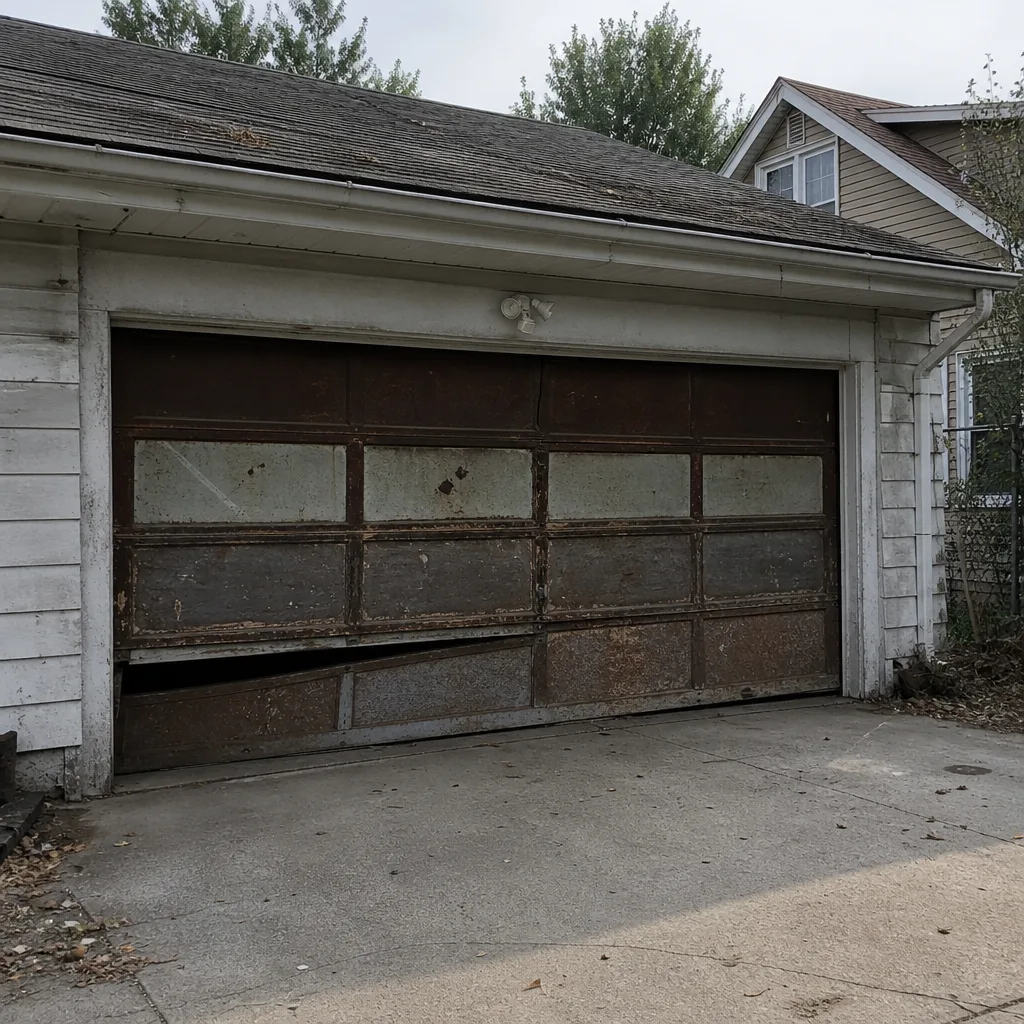 Before
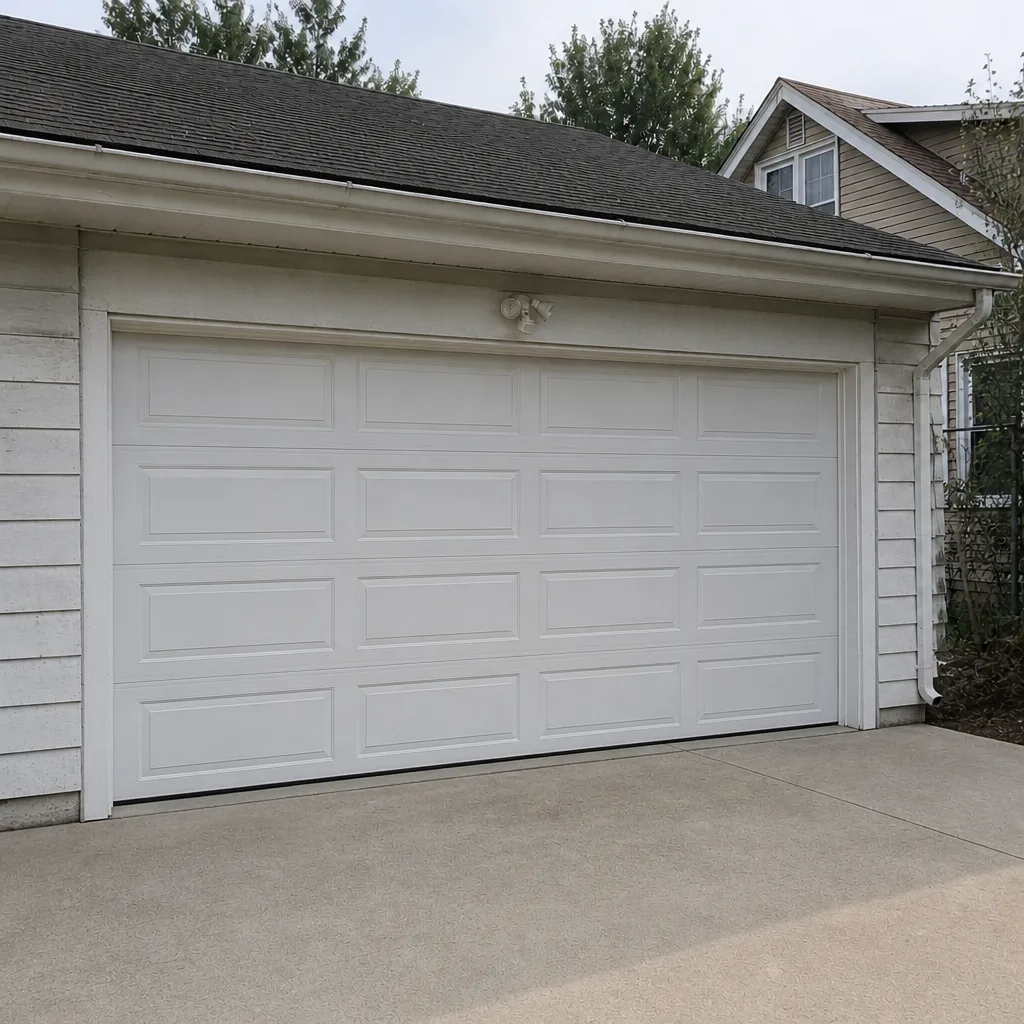 After
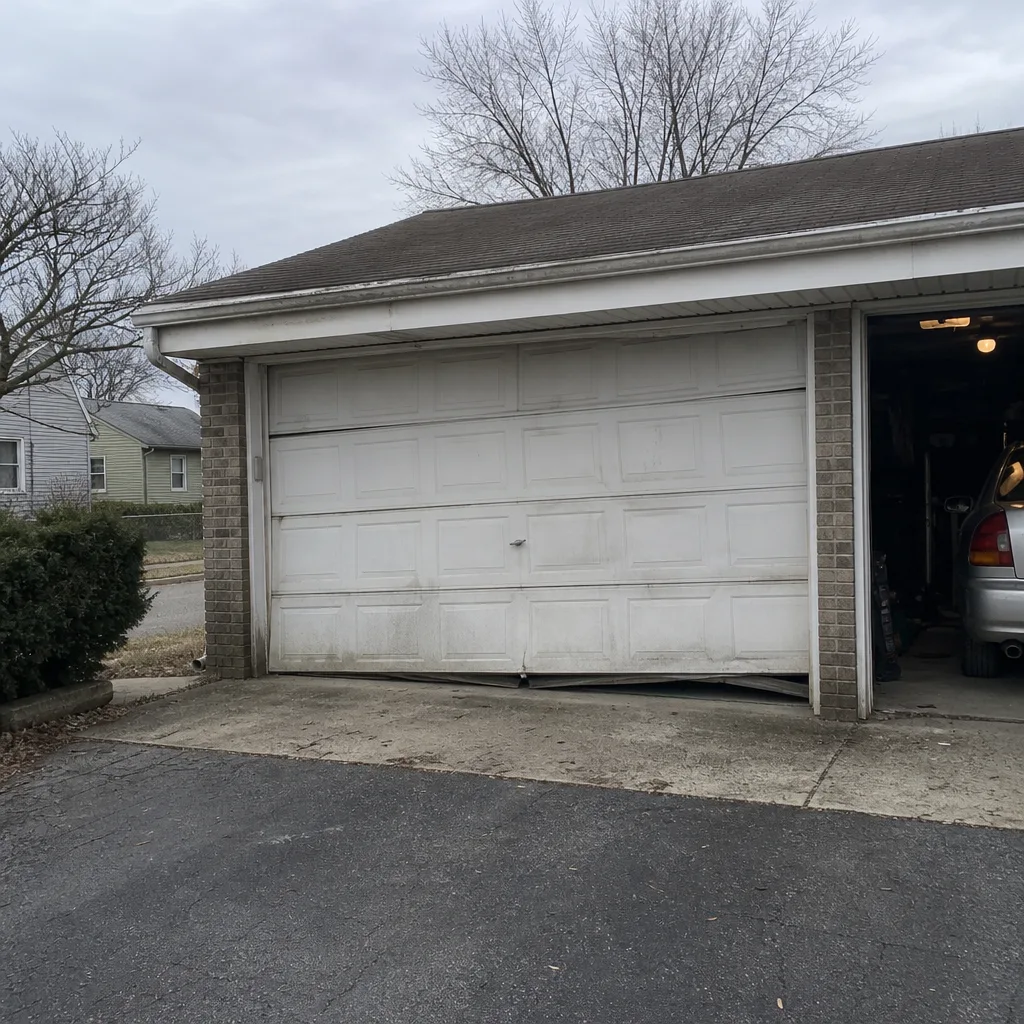 Before
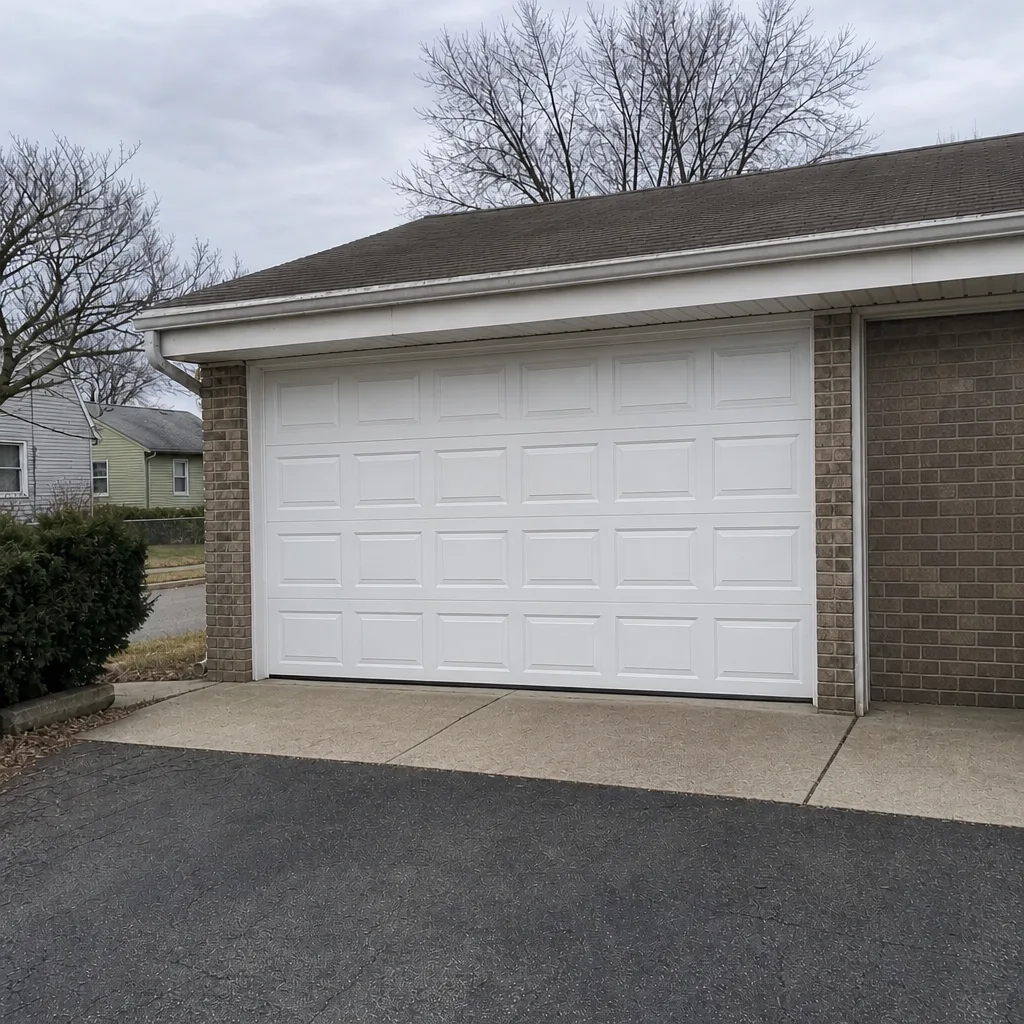 After
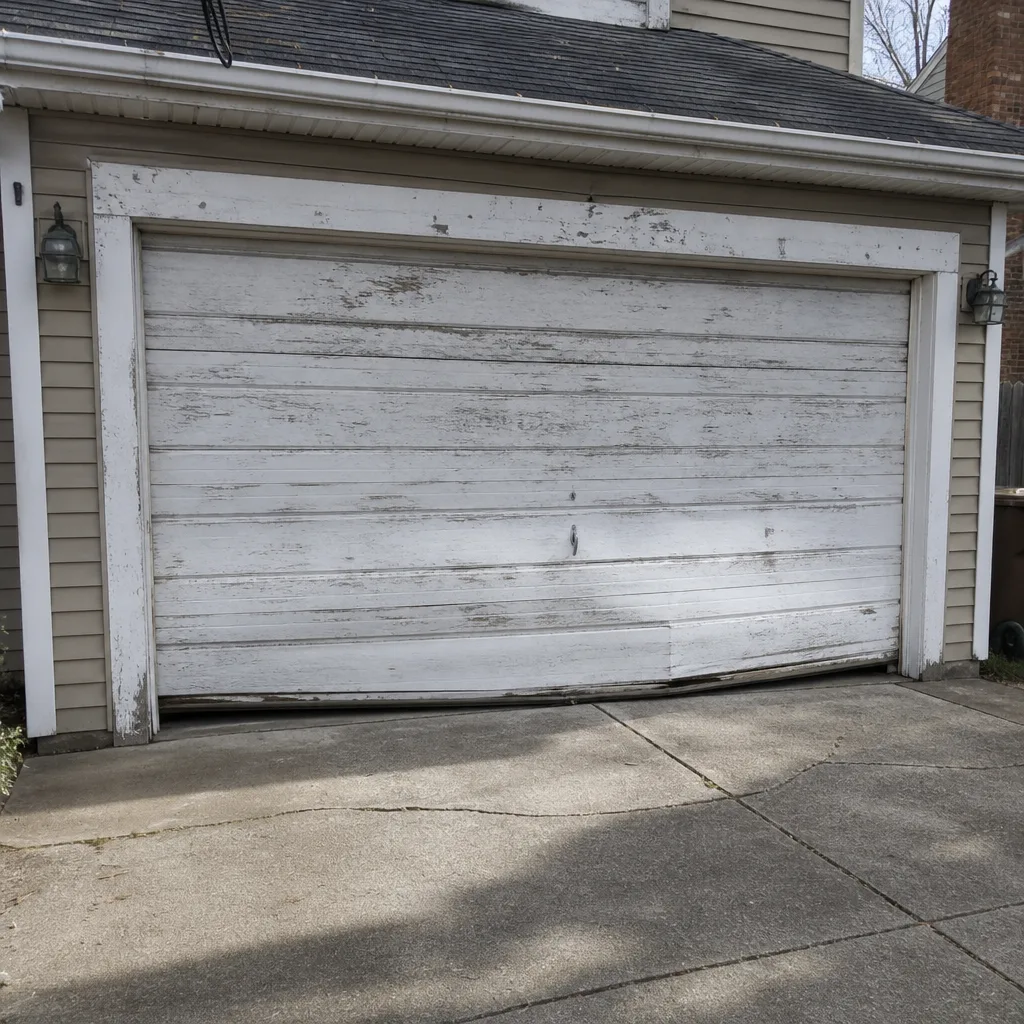 Before
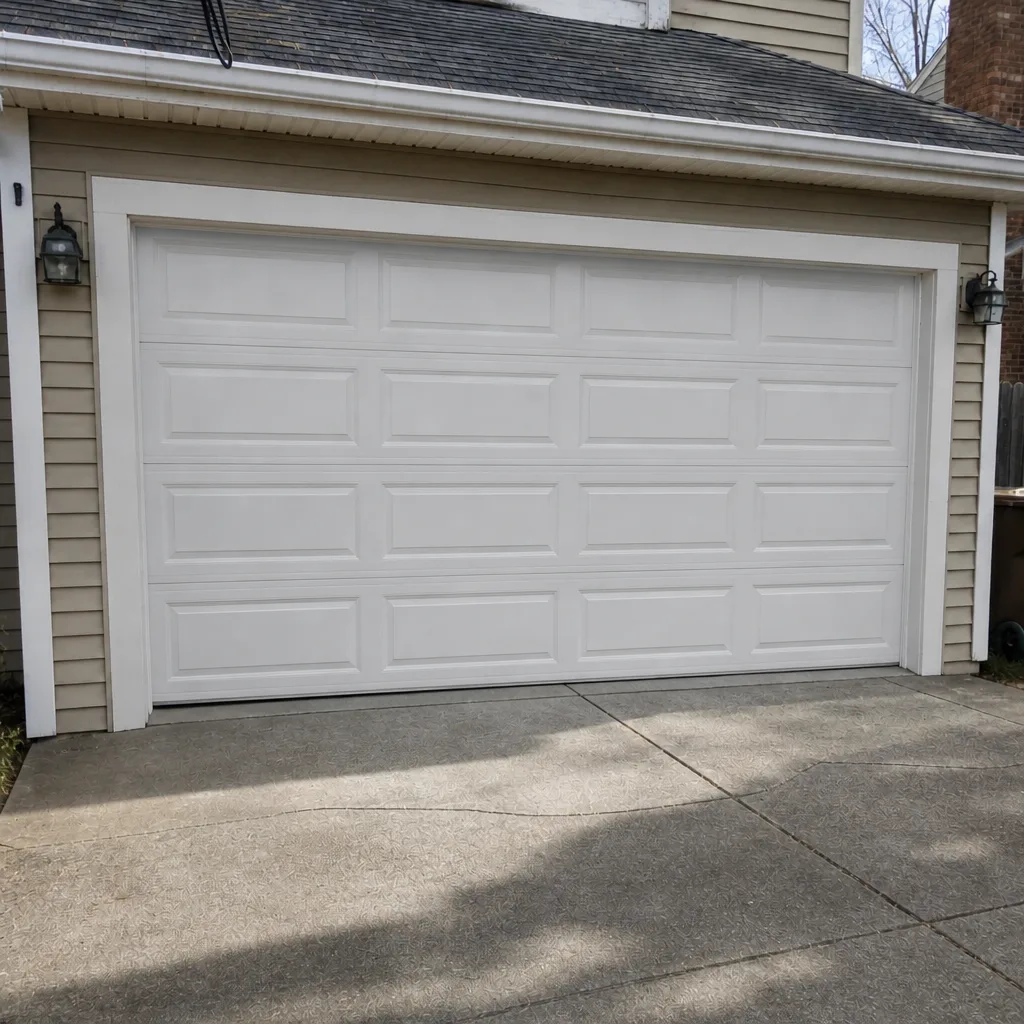 After
When to Call a Professional
Some things you can handle yourself: pulling the release cord correctly, proping a door, tarping a stuck opening, checking the model number. Some things you absolutely should not. Call a trained professional if a spring has broken, if the door is stuck or off its track, if the opener runs but the door doesn’t move, or if the door won’t close and won’t stay secured. These are the situations where a wrong move turns a repair into an injury or a bigger bill.
Our garage door repair service covers all eight major brands, and our emergency service is a real offering, not a reluctant extra – if your door fails and it can’t wait, we take it seriously, and we can often schedule same-day help. Garage Door Repair Trenton Pros offers free estimates in Trenton – call (833) 509-3463 and we’ll diagnose the problem before recommending anything you don’t need.
Frequently Asked Questions
Not alone, and not if you can avoid it. A door without spring tension is very heavy and can drop without warning. If you must move it, follow the two-person sequence above with the door fully closed first, lift slowly from both sides, and prop it the moment it’s up. If it fights you, stop and call a professional. For a spring failure in Trenton, a trained technician should handle it – torsion springs carry stored energy that’s dangerous to work around.
It hangs from the opener rail near the door, usually red with a T-handle, and it disconnects the door from the opener so you can move it by hand. It doesn’t unlock the door, lighten it, or touch the springs. Pull it only when the door is fully closed and stationary – pulling it while the door is moving can jam or drop it. Find yours today while the door is working.
If your opener has battery backup, like the LiftMaster 8500W, it keeps working on battery for a limited time – use the door sparingly and don’t burn the battery checking it. Standard units without backup lose power completely: pull the release with the door closed and move it manually, or wait for the power to return. Test your backup battery a couple times a year so it’s there when you need it.
Four things: your door brand and material, your opener brand and model number, the spring type (torsion or extension), and a description of what the door is doing. That information lets the technician bring the right parts and diagnose faster. We work on Clopay, Amarr, Wayne Dalton, Craftsman, LiftMaster, Chamberlain, Genie, and Raynor systems, so naming your brand helps us prepare. Call (833) 509-3463 for an exact quote – estimates are free.
Close it as far as it will go by hand, then prop something solid under the bottom section so it can’t be lifted from outside. If there’s a manual slide lock, use it. For weather, hang a heavy tarp or plastic sheeting from the inside with weight at the bottom. Don’t leave a disconnected door unsecured overnight if you can help it – and call a technician for a proper repair.
No. The written quote is the price, agreed before any work starts. We diagnose first, then recommend – and you don’t pay for parts you didn’t agree to. That’s true for a simple opener fix and for a full spring replacement alike. Call (833) 509-3463 for an exact quote on your Trenton door.
The Bottom Line
A garage door emergency is a scheduling problem if you’ve prepared, and a safety problem if you haven’t. The three things that decide it: know how to use your emergency release correctly, know your door and opener brand plus spring type, and know how to secure the door once it’s open. Don’t force a broken-spring door, don’t pull the release while the door is moving, and don’t keep cycling an opener that’s already struggling. Check the door before winter, test your backup battery, and write down your model numbers. Do those things and a failure at 7 AM stays manageable. If it’s already happened, our Trenton team is ready – call (833) 509-3463 for a free estimate.
Written by the team at Garage Door Repair Trenton Pros.